

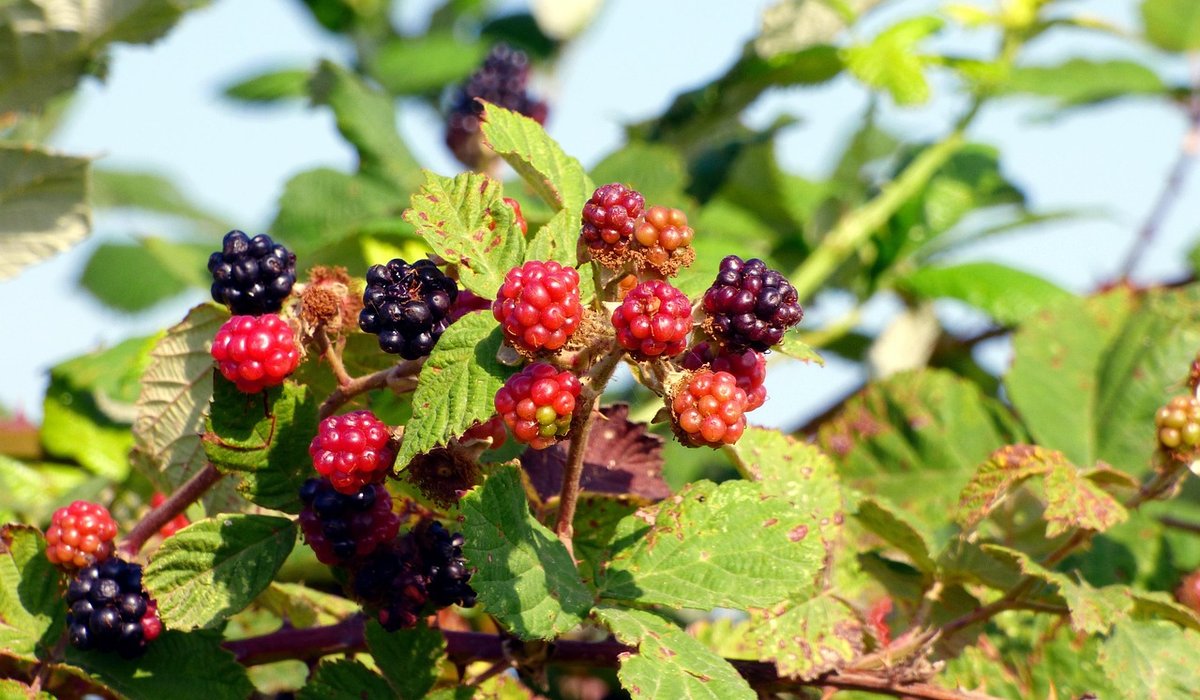
Growing Brambles and Blackberries in a Cottage Garden
A hedgerow treasure for the garden
Few plants blur the line between wild hedgerow and cottage garden quite so happily as the bramble. Long before anyone bred a cultivar, our lanes and field edges were strung with arching thorny canes of blackberry, picked by generations of country children with purple-stained fingers and scratched forearms. In British folklore the bramble was protection as much as provender: laid through a hedge it kept stock in and strangers out, and a tangle of brambles by a cottage door was said to keep ill luck at bay.
There is also the old warning, still repeated in country districts, that blackberries should not be picked after Old Michaelmas Day in October — the devil, it is said, has spat upon them. Treat it as nature's way of telling you the fruit has gone soft, sour and flyblown. Plant a bramble deliberately and you are planting a piece of that hedgerow heritage, with the bonus of fruit you can actually reach.
Choosing canes that suit your plot
If there are small children or tender hands in the household, thornless sorts are a mercy. They crop well enough to satisfy anyone but the most hardened jam-maker.
- 'Loch Ness' — thornless, upright and heavy-cropping, with a long season from late summer into autumn. The most reliable choice for a small garden.
- 'Fantasia' — thorny but vigorous, with enormous sweet berries that are the equal of any wild fruit.
- 'Helen' — thornless and notably early, cropping from mid-July.
- 'Merton Thornless' — an older variety, modest in habit, good for a short fence or a north-facing wall.
Do not overlook the hybrid berries, which are simply brambles with a distinguished family tree. The loganberry crops early and tastes sharp and winey; the tayberry is long, crimson and superb for jam; the boysenberry is worth growing for the name alone. All are trained in exactly the same way as a blackberry.
Planting and training
Give brambles sun for at least half the day and a soil that drains but holds moisture. They are greedy feeders, so work in plenty of well-rotted manure or garden compost a fortnight before planting. Space plants 1.8 to 2.4 metres apart along a fence, wall or a permanent line of straining wires; a freestanding arch or an obelisk suits a single plant and makes a handsome feature over a path.
Plant bare-root canes between November and March, potted plants at any time when the ground is workable. Set them 5 centimetres deeper than they were in the pot and firm well. Cut the new canes back to 30 centimetres after planting to encourage strong growth from the base, and mulch with compost, keeping it clear of the stems. Water steadily through the first summer — brambles sulk if they dry out while establishing.
Pruning: the two-year rule
Everything about pruning brambles follows one simple fact: canes fruit in their second year and then never again. Once you have that clear, the job takes twenty minutes a year.
- Through summer, pinch out the tips of new canes at about 60 to 75 centimetres to encourage side shoots, which carry the following year's flowers.
- After fruiting, cut every cane that has just cropped right down to the ground. Do not leave stumps — they harbour disease.
- Tie the strongest new canes in to replace them, fanning them out along wires or the arch, roughly 15 centimetres apart.
- In late winter, tip back the side shoots to two or three buds to keep the plant tidy and the fruit within reach.
The result is a plant that carries this year's fruit and next year's promise side by side, never a thicket of dead wood.
Keeping brambles under control
Brambles spread by two means: suckers from the roots and, more insidiously, by the tips of canes arching over and rooting wherever they touch bare soil. Deal with both and a bramble patch stays a garden plant rather than a takeover bid.
- Do not let new canes trail on the ground. Tie them up as they grow, or loop them loosely along the wires.
- Slice through any tip that has rooted, lift it with a fork and pot it on — it makes a generous gift.
- Sink a root barrier or grow the plant in a large pot if space is tight.
- Dig out stray suckers as soon as you see them, before they harden into woody canes.
- Mow or strim around the base of the row to keep the ground clean and make rogue growth obvious.
Harvest and the seasonal larder
Picking begins in July for early sorts and runs to the first frosts for the late ones. Choose fruit that comes away with a gentle tug and a soft plop into the palm; anything that resists is not ready. Pick in the cool of the morning, and take a shallow container so the berries do not crush under their own weight.
Blackberries freeze beautifully on trays and then into bags, and they make the finest jam in the country — weigh the fruit, add three-quarters of its weight in sugar, a squeeze of lemon and a knob of butter to keep the froth down. Cook gently until a drop wrinkles on a cold saucer. A row of brambles along a fence, properly trained and pruned, will give you more fruit than you know what to do with, and remind you every August why the hedgerow has always been the country kitchen's truest larder.


Foraging
-
Pick creamy elderflower heads on a sunny morning and turn them into a refreshing cordial. Includes citric acid, lemons, and bottling tips.


Hedgerow




-

Long established fact that a reader will be distracted
-

Long established fact that a reader will be distracted
-

Long established fact that a reader will be distracted


Folklore
Karla Gleichauf
12 May 2017 at 05:28 pm
On the other hand, we denounce with righteous indignation and dislike men who are so beguiled and demoralized by the charms of pleasure of the moment
M Shyamalan
12 May 2017 at 05:28 pm
On the other hand, we denounce with righteous indignation and dislike men who are so beguiled and demoralized by the charms of pleasure of the moment
Liz Montano
12 May 2017 at 05:28 pm
On the other hand, we denounce with righteous indignation and dislike men who are so beguiled and demoralized by the charms of pleasure of the moment